

Have you ever wondered why, when attending a concert in a massive hall or screaming for your favorite artist at the stage front, the sound remains crystal clear whether you’re at the very front row or way up in the "nosebleed" seats? The secret to enveloping tens of thousands of people in sound isn't just about volume—it’s the technology behind those strange-looking speakers hanging in long, curved rows. If you want to know what makes these speakers so special and why they’ve become the "hero" of the concert world, let’s find out!
What is a Line Array Speaker?
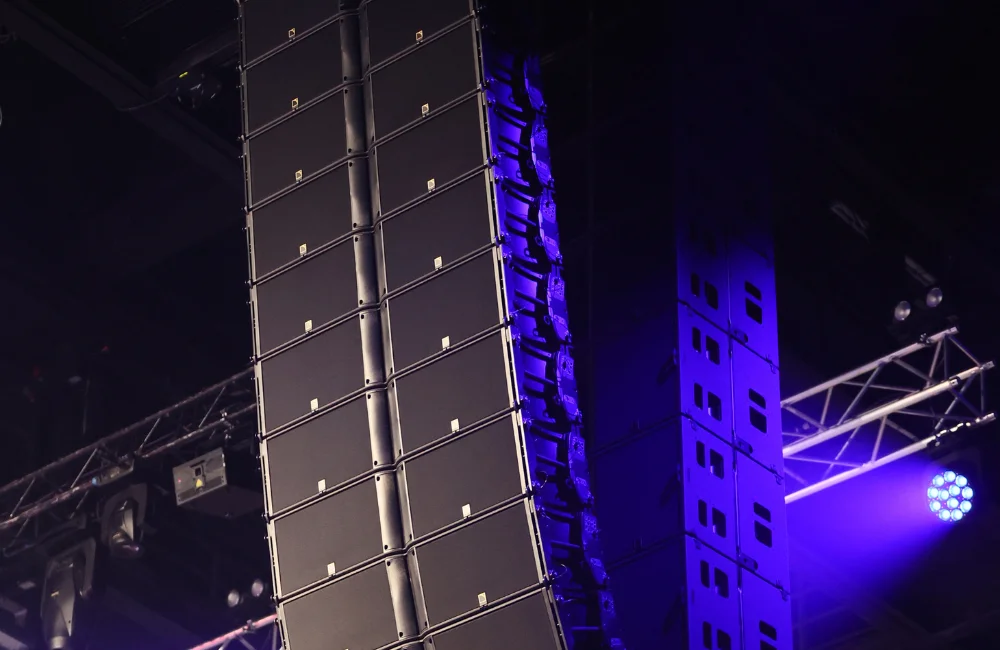
A Line Array is a system consisting of multiple identical loudspeaker units linked together in a vertical or horizontal line. They are designed to work together as a single, large sound source. This innovation was created specifically to solve the problem of sound distribution in large spaces. The longer the array, the more precise the control over the sound's direction becomes.
How Line Array Speakers Work
It’s not just about stacking boxes; there is a lot of "audio physics" involved to make the sound travel further and more powerfully than traditional square cabinet speakers:
Would you like me to translate the "Cylindrical Wave" section next to explain the science of how these speakers throw sound further with less loss?
Summation of Sound Waves
When speakers are placed close together at precisely the right distance, the sound waves from each unit reinforce one another (Constructive Interference) instead of clashing. This results in a cylindrical sound wave that travels much further than usual, maintaining energy far better than traditional speakers.
Vertical Dispersion ControlThe standout feature of a Line Array is that it prevents sound from scattering toward the ceiling or floor unnecessarily. Instead, it projects sound in a focused vertical plane. This allows Sound Engineer to "aim" the audio precisely at the audience's ears, regardless of whether they are standing right by the stage or far in the back.
Why Line Arrays Rule the Concert World
World-class venues choose this technology not just because it looks cool, but because it delivers 10/10 sound quality:
- Consistent Volume Levels: With older speakers, the further back you go, the quieter it gets. Line Arrays are designed so that the volume difference between the front and back rows is minimal.
- Reduced Reflection: By controlling the direction of the sound, audio doesn't bounce off walls or ceilings, preventing that annoying echo or "boomy" reverberation.
- Wide Coverage: Perfect for large-scale events with massive crowds, as they can easily throw powerful sound all the way to the back of the hall.
Types of Line Array Speakers
To suit different venues and event types, these systems are categorized in a few ways:
By Powering System
- Active Line Array: These have built-in amplifiers. They are easy to control and save time during setup.
- Passive Line Array: These require external amplifiers. They offer more flexibility for custom-tuning large-scale sound systems.
By Rigging (Hanging) Style
- Straight Array: Hung in a straight vertical line, ideal for long-distance sound projection.
- Curved Array: Hung in a curve to cover a wider area, perfect for medium to large venues.
- J-shaped Array: Hung in the shape of the letter "J." This covers both the near and far areas of the crowd, making it the go-to choice for major concerts and large stages.
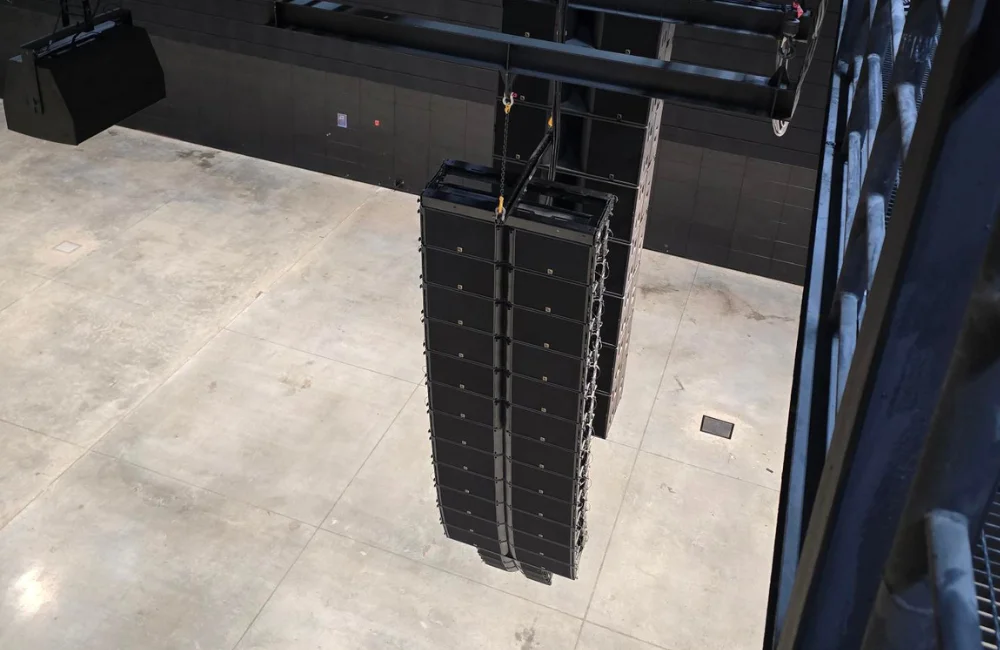
UOB Live Uses High-End Line Arrays from L-Acoustics
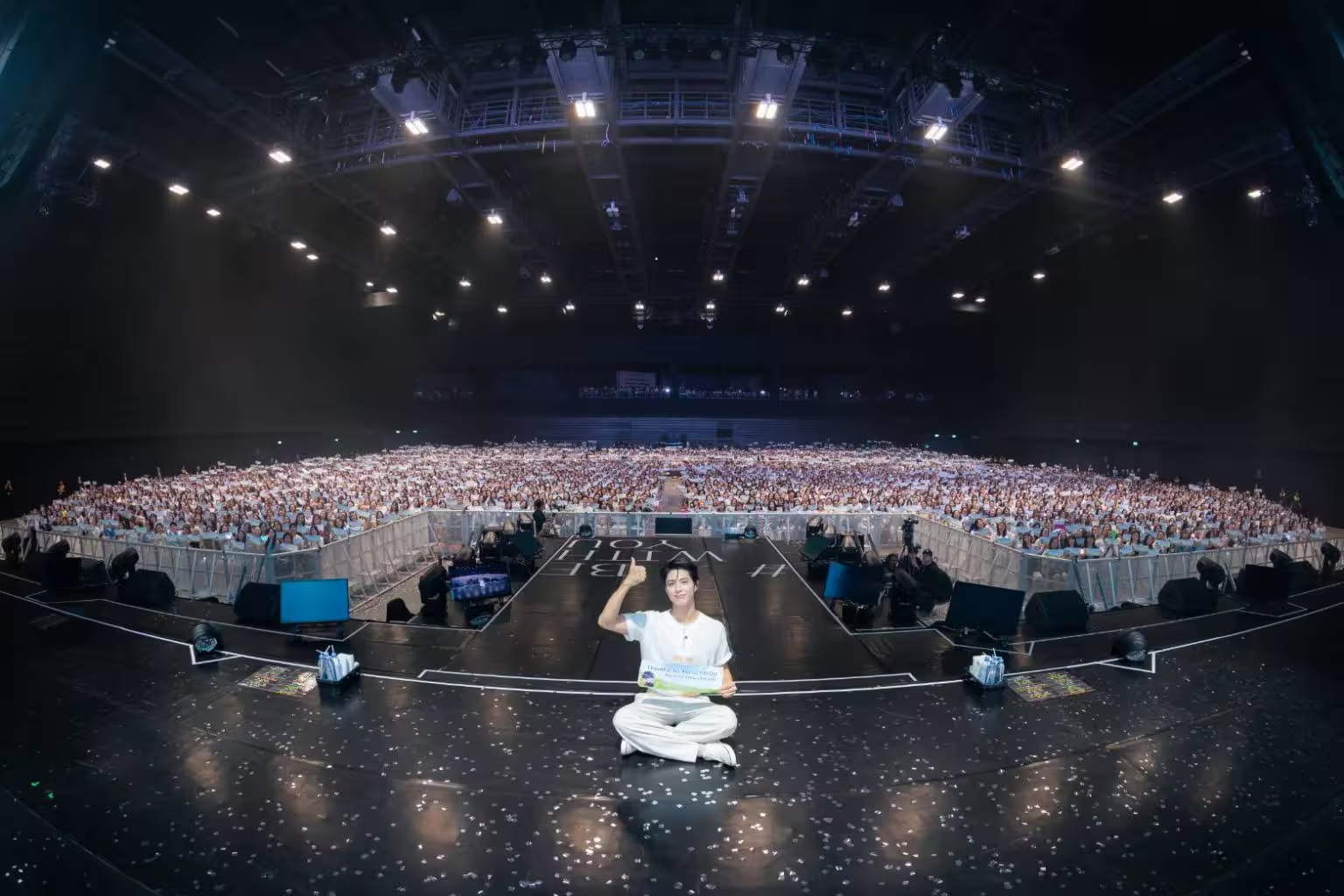
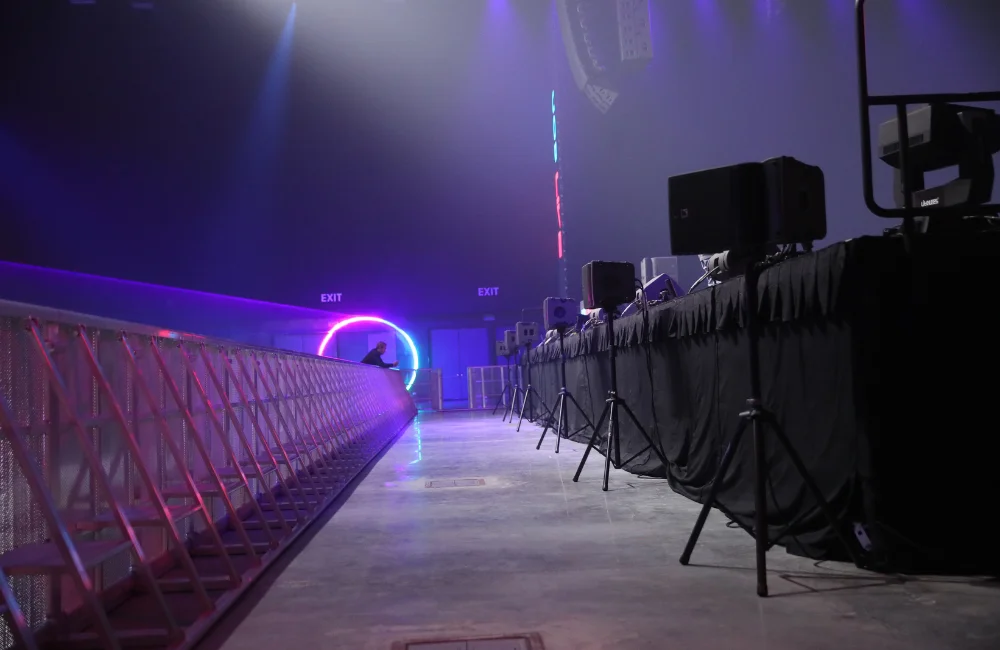
If you’re looking for a concert venue or an Event Space that prioritizes a world-class audio experience, let's just say UOB Live isn't playing around. We’ve chosen sound systems from L-Acoustics, the French brand trusted by global superstars. Our Line Array installation has been meticulously calculated to ensure every seat in the hall receives full, punchy, and crystal-clear audio. Whether you snagged a standing ticket at the barricade or a seat in the furthest zone, we guarantee a "full-scale" fun experience.
Furthermore, our team of Sound Engineers is ready to fine-tune the speaker angles to suit any event—from rock concerts requiring chest-thumping bass to fan meetings where you need vocals so clear it feels like the artist is whispering in your ear. If you want to experience what true high-end sound feels like, you have to check in at UOB Live at Emsphere. You’ll finally understand what people mean when they say their ears are "coated in gold!"
Frequently Asked Questions (FAQ)
Why do Line Array speakers have to be hung so high? Can’t they just sit on the floor?
They can be placed on the floor (called a "Ground Stack"), but hanging them high is much more effective for sound distribution. If they were on the floor, the people in the front would get blasted with sound until their ears went numb, while the people in the back would have the sound blocked by the crowd in front of them. Hanging them high allows the sound to travel over the heads of the front rows to reach the back clearly, while also reducing floor reflections.
Is it true that the more speaker cabinets you hang, the better?
A higher number of cabinets allows for more precise directional control, especially for low frequencies, and helps the sound travel further. However, this depends entirely on the Sound Engineer’s calculations. Hanging more speakers than the hall size requires can actually cause the sound waves to clash, resulting in a "blurry" or muffled sound.
What kind of events are Line Arrays best for?
They are ideal for large spaces where consistent clarity is needed at every point—such as major concert halls, outdoor music festivals, or Event Spaces with high ceilings where you need to prevent echoes from scattering. However, for a small party in a tight room, standard point-source speakers might be more practical and budget-friendly.