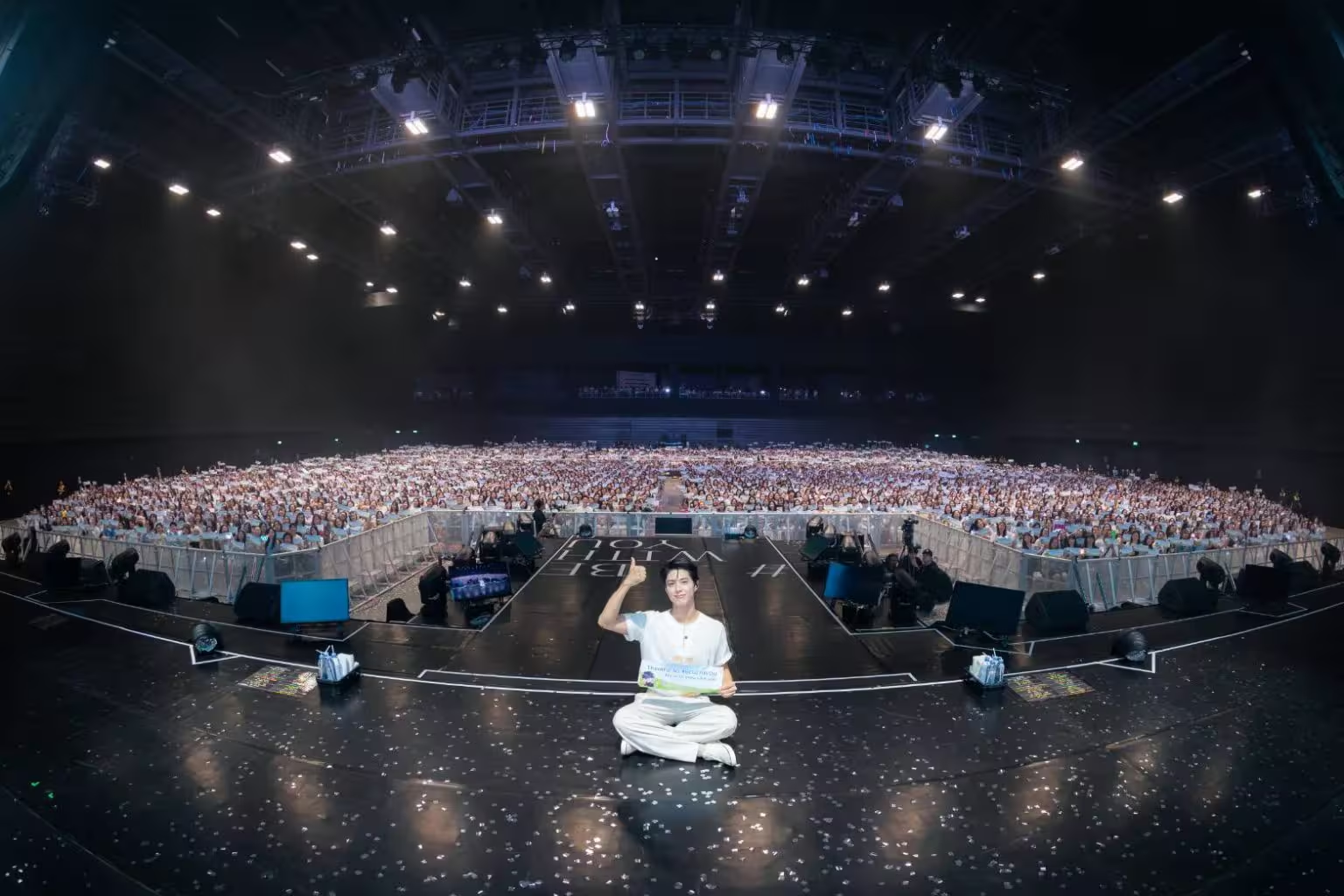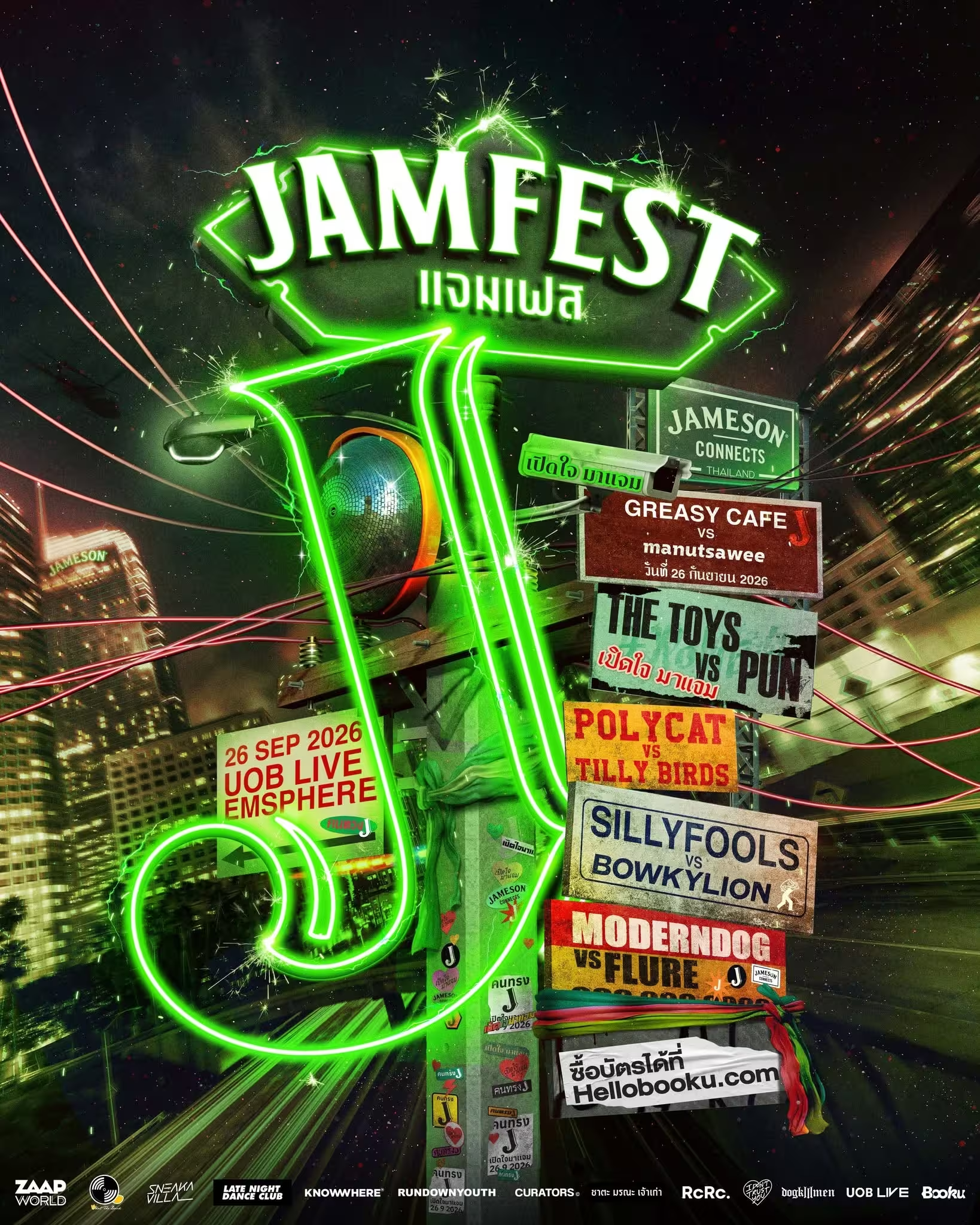


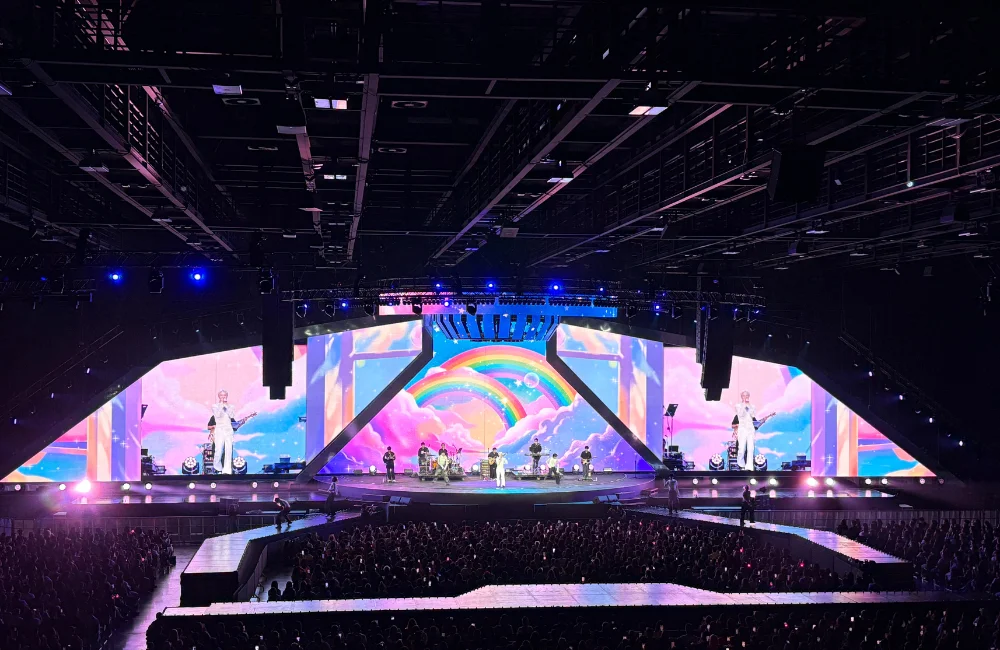
Lately, you’ve probably been hearing the term "T-Pop" more and more often in the music industry, right? It’s undeniable that this is a phenomenon where Thai music is sparking a flame and showcasing Thai talent to the world once again. This isn't just ordinary pop music; T-Pop has redefined itself through a unique identity and incredible talent. So, what exactly is the T-Pop we’re talking about? What is its history, why has it resurfaced as a massive trend, and what should we look out for in the future? UOB Live will take you through the answers in this article!
What is T-Pop?
T-Pop stands for Thai Pop Music, and its various definitions reflect the growth and transformation of the industry. Some view T-Pop as music primarily in the Thai language—easy to listen to, mid-tempo, with lyrics mostly about human emotions, and typically without a full synchronized dance routine. Artists in this genre usually distance themselves from Rock, Mor Lam, Luk Thung, "Songs for Life," or more niche genres. Meanwhile, others argue that T-Pop isn't limited to boy bands, girl groups, or idols, but also includes Indie Pop and other sub-genres.
However, the definition of T-Pop drawing the most attention today refers to Thai pop music that has become diverse enough to attract both local and international interest, reaching standards comparable to global pop music. It represents Thai culture telling stories through universal musical languages while maintaining its own identity. Even if a song is sung in English, if it carries that distinct "Thai vibe," it is still considered T-Pop.
Why is T-Pop the "One to Watch" in the Thai Music Industry?
T-Pop is currently under a major spotlight due to several factors fueling its growth, such as:

- Elevated Quality: Post-2020, the T-Pop industry set new standards in production, songwriting, and artist development, demonstrating an extraordinary level of dedication and seriousness.
- The Power of Social Media: Platforms like TikTok have become vital channels for T-Pop to reach the masses and go viral instantly. Examples include the group 4MIX, who gained massive fame as far away as Mexico, and Proxie’s hit "Silent Mode" (Kon Mai Kui), which spread like wildfire through user-generated content.
- Intriguing Business Models: The success of BNK48 and the mega-hit "My Ambulance" (Rak Tid Siren) reignited interest in pop and idol group formats, leading investors and labels to recognize the immense potential of this business model.
- Intensive Training Systems: Many labels and producers have adopted K-Pop-inspired training systems, involving rigorous, all-around development. This has produced highly versatile artists, such as the groups BUS or ATLAS, who underwent 2–3 years of training before debuting to the public.
- Unique Charm: Many observers believe T-Pop could be the "Next Step" in global pop after J-Pop and K-Pop. T-Pop’s standout features include freedom of expression for artists and a close-knit bond with fans—offering a different vibe from the more structured boundaries often found in K-Pop.
- Concerts and Music Festivals: Large-scale festivals like T-POP Fest, Mix Pop Music Festival, and Monster Music Festival, which feature over 100 T-Pop artists, serve as a clear sign of the industry’s vibrancy and growing support.
Tracing the T-Pop Journey: From Past to Present
Let's take a look back at the evolution of T-Pop—from the pioneering Pop Stars to the idol group era and today’s high-standard, diverse landscape. How did it all begin?
The Early Era: The Pop Stars
In the 90s, Thai Pop Stars were often seen as "timeless divas" or unreachable idols. With limited media channels like TV, artists who dominated airtime became household names. Clear examples are Tata Young and Bird Thongchai, who are regarded as Thailand's first international Pop Stars, achieving success with concerts and Asia tours in Japan.
The Kamikaze Era
Following the 90s came the Kamikaze era, debuting in 2007 with a massive roster of 22 artists—a fresh concept at the time. Their music was fun, bright, and catchy (like the hit "Khat Jai"). Although initially criticized for being too similar to K-Pop, this era undeniably inspired an entire generation of Thai youth through groups like Four-Mod, Siska, Faye Fang Kaew, K-Otic, Waii, Knomjean, Timethai, and 3.2.1. Today, Kamikaze music is celebrated for its iconic Y2K vibe and is even compared to the style of modern groups like NewJeans.
The Mono Music Era
Alongside Kamikaze, Mono Music played a significant role with groups like G20 and Candy Mafia. Mono Music was one of the first labels to implement K-Pop-style training systems and production while keeping the lyrics in Thai, successfully capturing fans who loved the Korean aesthetic.
The BNK48 Era
After a period of quiet for girl groups and boy bands, the arrival of BNK48 in 2016–2017 was a major phenomenon that shook the T-Pop industry. By bringing the 48 Group model from Japan to Thailand for the first time, they leveraged an existing fan base. Their hit "Koisuru Fortune Cookie" became a national sensation, pulling pop back into the mainstream. They also fostered deep fan engagement through handshake events and a dedicated Theater, generating record-breaking revenues and a powerhouse fandom.
The New Post-Pandemic Era
The post-COVID era marked a major turning point. The success of BNK48 and "My Ambulance" encouraged investors to pivot back to the idol group model. A standout example is 4EVE (debuted in 2021 by XOXO Entertainment), which elevated production and performance standards, followed closely by groups like PiXXiE, Proxie, and Perses. TikTok also became a game-changer for reach, while groups like BUS and LYKN showcased a leap in stage performance and global fandom power.
Keep an Eye on T-Pop: Building International Momentum
T-Pop is currently in an exciting phase with a real chance to go international. The quality of Thai artists and production now matches global standards. Many agree that T-Pop is a fascinating "Next Step" after J-Pop and K-Pop, especially given the spectacular production seen at recent Concerts in Bangkok. T-Pop’s core strengths—artistic freedom and the intimate charm between artists and fans—are exactly what international audiences find captivating. Coupled with a strong foundation in local music and diverse genres, this is only the beginning of T-Pop’s global journey.

Summary
T-Pop has journeyed through many eras—from the pioneering Pop Stars to the Kamikaze and Mono Music years that gradually nurtured new standards, through to the BNK48 phenomenon that shook the nation. Now, in this post-pandemic era, T-Pop is in full bloom. With high-caliber artists, world-class production, rigorous training systems, and social media as a driving force, T-Pop is no longer just a local genre—it is the new hope of the Thai music industry on the global stage.
With its unique Thai charm and talent that rivals any nation, T-Pop is ready to create the next "Magic Moment" in music and capture the hearts of audiences worldwide. Let’s support and watch this industry grow together; there’s definitely much more excitement to come!